EQUATORIAL GUINEA
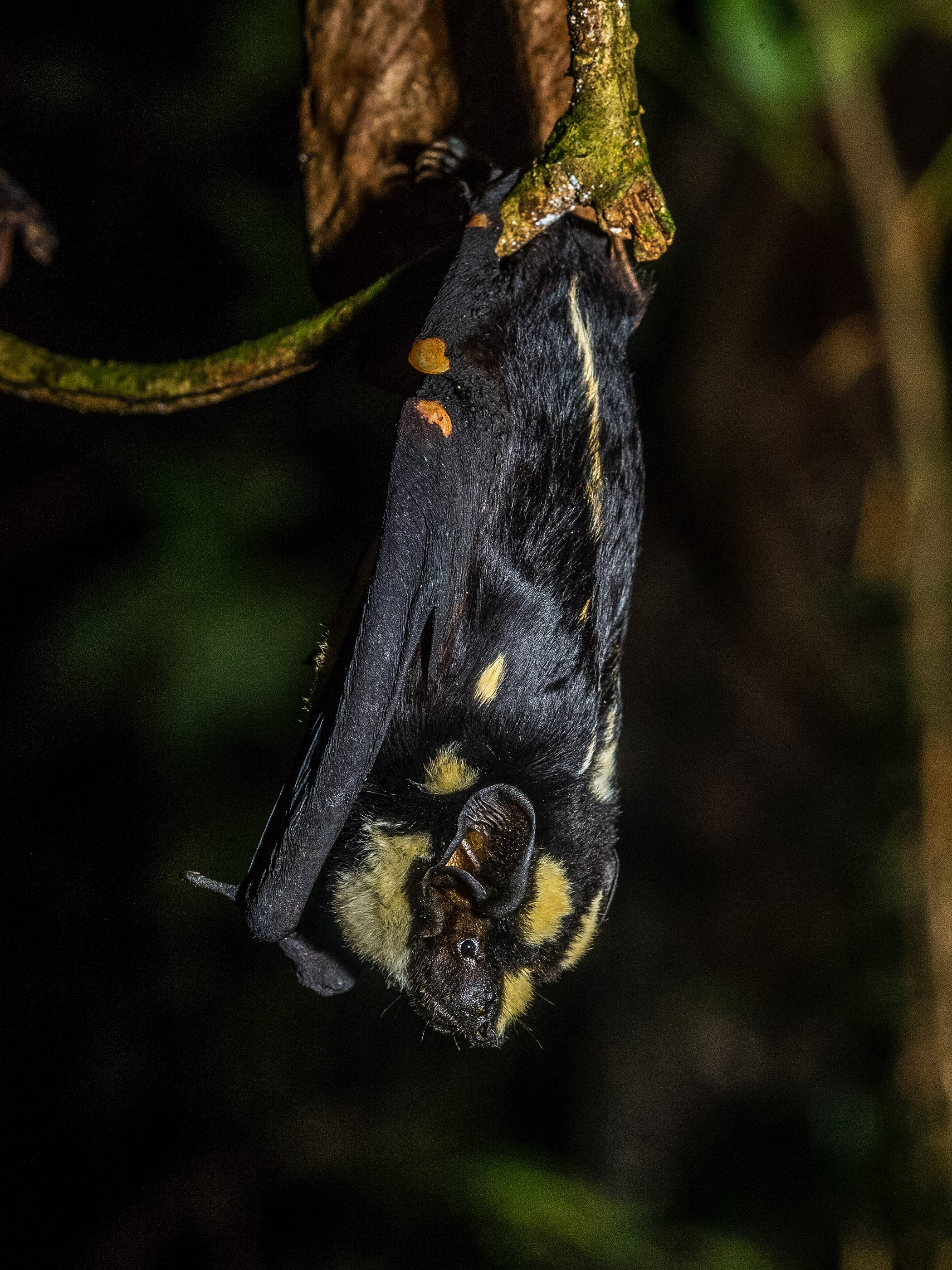
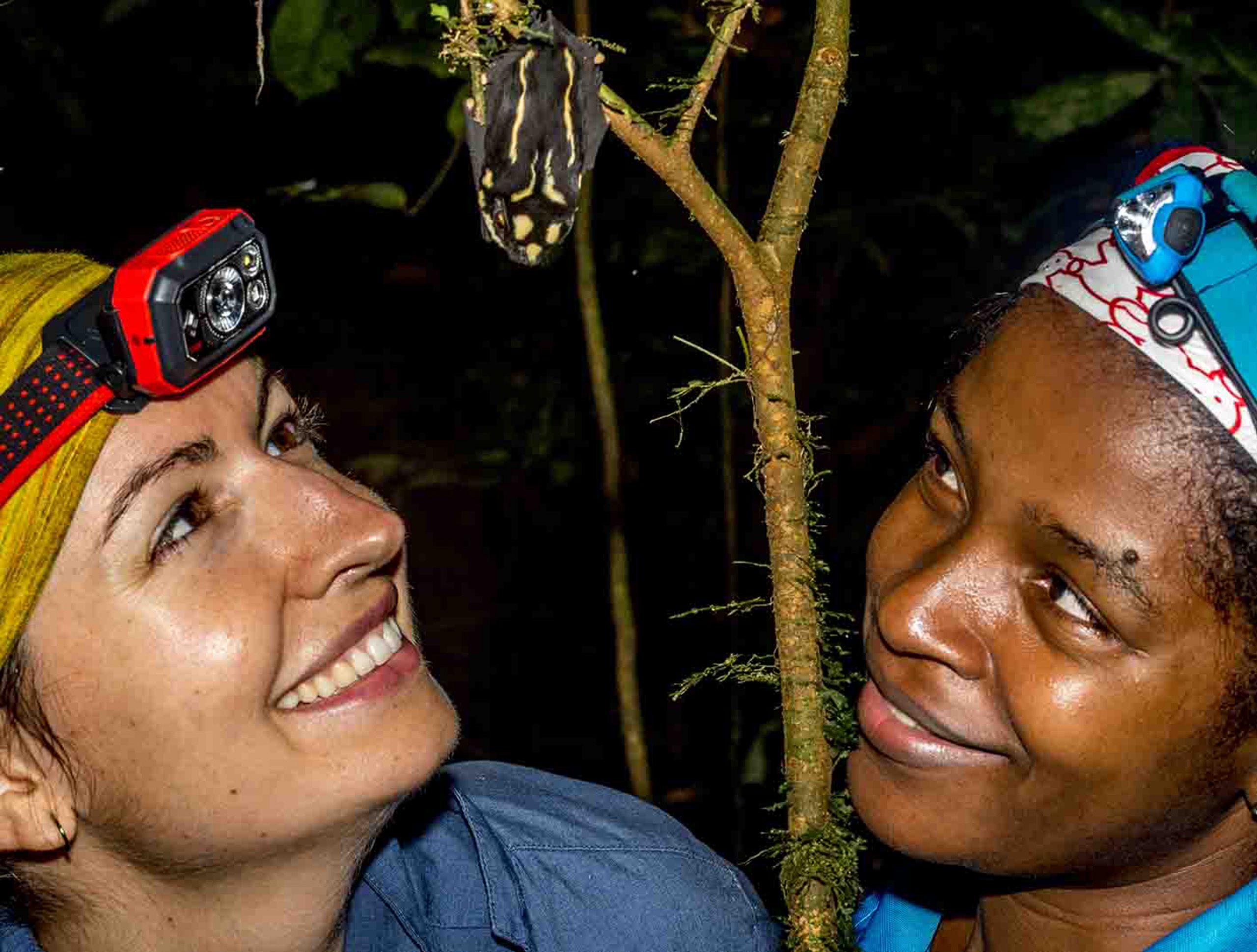
During an unforgettable expedition in the Congolese rainforest, I encountered the rare Panda bat (Glauconycteris superba), a striking species with black and yellow markings, known from just six locations across Africa. This moment was a turning point in my career, igniting a deep passion for studying the bats of Central Africa.
When I first arrived in Equatorial Guinea in 2018, I was captivated by its rich biodiversity and culture. However, it was the capture of the elusive Panda bat—also called the Badger bat—that solidified my determination to pursue a PhD and fill critical gaps in our knowledge of the region’s bats. Despite their crucial roles in pest control and seed dispersal around the world, bats in Equatorial Guinea have not been studied for over 30 years, and many species are at risk due to habitat loss. Our research has already identified over 50 species, two-thirds of which are new records for the region, with the possibility of discovering entirely new species.
In addition to my research, I aim to support local institutions by building capacity among technicians and students, encouraging them to develop their own projects. I firmly believe that the most effective guardians of the Panda bat and other species from Equatorial Guinea are the people from the region, but long-term mentorship and support are crucial to empowering them to achieve that goal.
The continental region of Equatorial Guinea is one of the most significant biodiversity hotspots in Central Africa, yet it remains largely unexplored. The most recent research on the country’s bat species dates back to the 1990s, which focused on the island fauna. On the mainland, however, bats were last mentioned in a scientific paper in 1971, where only 22 species were described. Complicating matters further, the taxonomy of several bat families have traditionally been tangled due to their similar morphologies. Only with recent advances in molecular techniques and increased exploration of remote areas have we started to get a clearer picture of the diversity among these species.
The country’s biodiversity now faces significant threats, driven by rapid infrastructural development and urban expansion, fueled by offshore oil extraction and refining. While the governmental body INDEFOR-AP oversees conservation in protected areas, enforcing regulations to mitigate logging activities and preserve biodiversity, its efforts are limited by challenging fieldwork conditions, economic constraints, and an underdeveloped capacity for research.
My work aims to bridge this gap. Data from our recent expeditions (2018–2024), combined with a museum collection from the Doñana Biological Station compiled between the 1960s and 1990s, will allow us to assess the diversity of bat species across Equatorial Guinea. So far, we have identified 55 species, and we are still conducting molecular analyses on some rare and cryptic specimens. From this ongoing research, we have found that 1 species is currently listed as Endangered, 3 as Near Threatened, and 6 as Data Deficient according to the IUCN Red List of Threatened Species. While 45 species are classified as Least Concern, their populations are either unknown or in decline, and only 10 species are considered stable. This highlights the urgent need to thoroughly understand which bat species are present in the region and to equip local authorities with the knowledge and resources needed for conservation. Without immediate action, some rare species may face extinction before they are even discovered!
Grants



Partners